
If you’ve been thinking about building a garden suite in Toronto or elsewhere in Ontario, 2026 may be one of the most interesting times to do it.
Ontario has temporarily enhanced its HST rebate for qualifying new housing, potentially allowing homeowners to recover up to $80,000 of the provincial portion of HST. And under the right circumstances, that can potentially include a newly constructed garden suite or secondary residence.
For us, this isn’t theoretical.
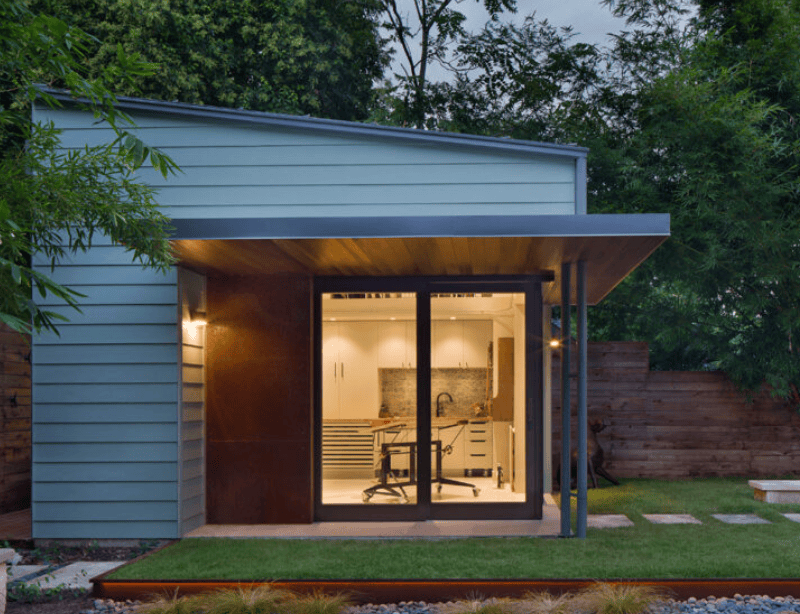
We’re already building a garden suite in our Toronto backyard for my mom.
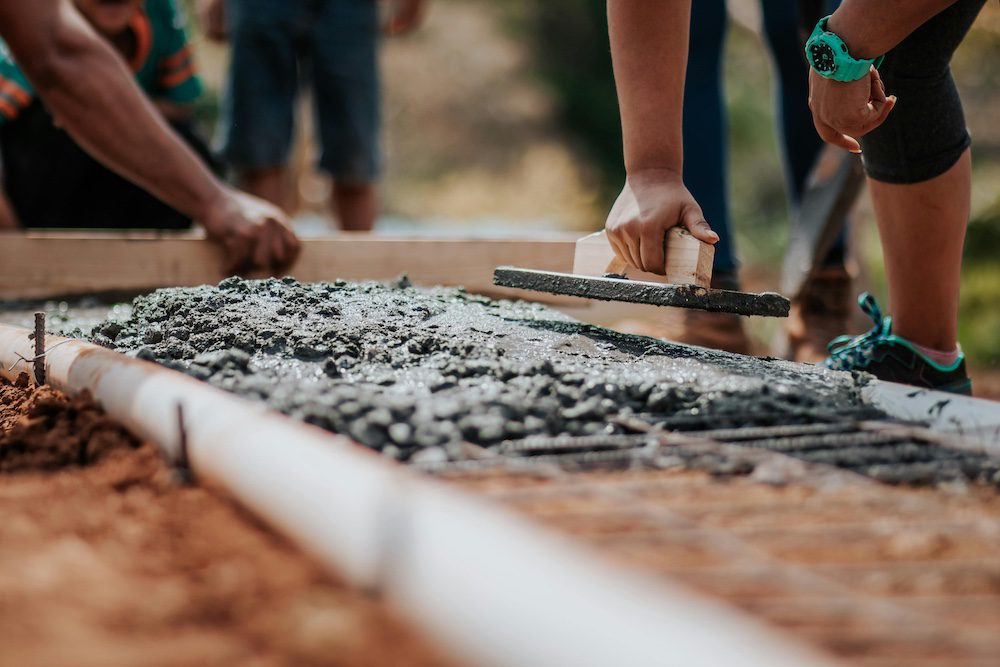
Our foundation is complete, and we deliberately began construction after April 1, 2026, in part so our project could potentially qualify for Ontario’s enhanced HST rebate, subject to meeting all of the eligibility requirements.
As a Toronto Realtor, I find the financial side of garden suites fascinating.
We spend hundreds of thousands of dollars renovating existing Toronto houses to create more space and increase their value.
A garden suite does something different:
It creates another home on land you already own.
And right now, Ontario is offering a potentially significant tax incentive to encourage qualifying homeowners to do it.
What Is the New Ontario Garden Suite HST Rebate?
First, there isn’t technically a program called the “Ontario Garden Suite Rebate.”
What Ontario has introduced is an enhanced version of its New Housing Rebate and New Residential Rental Property Rebate.
However, qualifying newly constructed secondary housing — potentially including a garden suite — can fall within these programs.
Previously, Ontario’s provincial New Housing Rebate generally refunded 75% of the provincial portion of HST, up to a maximum of $24,000.
Under Ontario’s temporary enhanced program, qualifying new housing can receive a rebate of up to $80,000 of the Ontario portion of HST.
For qualifying homes valued at $1 million or less, the enhanced rebate can effectively refund the entire 8% Ontario portion of HST, up to the $80,000 maximum. Different calculations and thresholds apply to higher-value properties.
That’s a significant incentive for anyone currently calculating the cost of building a garden suite in Ontario.
What Are the Dates for Ontario’s $80,000 HST Rebate?
This is extremely important.
For qualifying owner-built housing, construction generally needs to begin between April 1, 2026 and March 31, 2027, and the home must be substantially completed before 2030.
That’s one of the reasons our timing mattered.
We began construction on our Toronto garden suite after April 1, 2026, and our foundation is now complete.
If you’re considering building a garden suite, laneway suite or other qualifying secondary residence, I would be investigating the program now rather than assuming this incentive will be around indefinitely.
Can a Toronto Garden Suite Qualify for the $80,000 HST Rebate?
Potentially, yes.
CRA guidance says an individual who builds — or hires someone to build — a qualifying residential complex on land they own or lease can potentially qualify for the enhanced rebate if the applicable requirements are satisfied.
For the owner-built New Housing Rebate, the qualifying home generally needs to become the primary place of residence of the individual or a relation of that individual.
That’s particularly relevant to us because we’re building ours for my mom.
But homeowners need to understand that this is not an automatic $80,000 garden suite grant.
The rebate depends on factors including the HST actually paid, value of the qualifying home, ownership, occupancy, timing of construction and whether the project satisfies the applicable CRA requirements.
Before you build a financial plan around receiving $80,000, speak to an accountant or HST specialist who understands new-home rebates.
Why We’re Building a Garden Suite for My Mom
The financial incentive is wonderful.
But it’s not actually why we’re building ours.
We’re building our garden suite because I want my mom close to us as she gets older.
I don’t necessarily want my mom living with me.
I want her living beside me.
There’s a huge difference.
She’ll have her own front door, kitchen, bedroom and living space. She can have her own routines and her own privacy.
But she’ll also be steps away.
My kids can run across the backyard to see their grandmother.
We can have dinner together.
And as she gets older, I’ll have the peace of mind of knowing she’s close if she needs us.
To me, this is what modern multigenerational living in Toronto can look like:
Closeness without giving up independence.
Do Garden Suites Add Value to Toronto Homes?
As a Realtor, this is one of the questions I find most interesting.
Does building a garden suite increase your property value?
I think the better question is:
How much additional utility are you creating on the property?
You’re potentially taking a property containing one residence and creating a property containing two independent residences.
That second home could provide rental income.
It could house an aging parent.
It could eventually house an adult child.
It could become a home office or flexible family space, subject to applicable rules.
And when you eventually sell, another buyer may place considerable value on having an existing legal secondary dwelling.
That doesn’t mean spending $300,000 on a garden suite automatically increases your Toronto home’s value by $300,000.
Real estate isn’t that simple.
But when evaluating the return on investment of a garden suite, I think homeowners should consider much more than immediate resale value.
You’re creating an asset with multiple potential uses over several decades.
One Garden Suite Can Have Several Lives
This is what I love about our project.
Today, it’s being built for my mom.
Years from now, maybe one of my children lives there while attending university or saving for their first home.
Later, perhaps we rent it.
One day, perhaps my husband and I move into the garden suite while one of our children occupies the main house.
Or eventually, when we sell the property, another multigenerational family may look at our house and say:
“This is exactly what we need.”
One little house could solve completely different housing problems over its lifetime.
That’s a very different type of return on investment.
Toronto Needs More Housing Options for Seniors
There’s another reason I’m excited about garden suites in Toronto.
Not everyone has an aging parent who needs somewhere to live.
But there are plenty of older people who want something smaller.
A senior may own a large Toronto house that no longer makes sense.
The kids are gone.
There are bedrooms they don’t use.
There are stairs.
There’s snow to shovel, a garden to maintain and an expensive house to repair.
Maybe they’re ready to sell.
But why should their only choices be a condominium or retirement residence?
Imagine instead renting a beautifully designed 600- or 700-square-foot Toronto garden suite in the same neighbourhood they’ve lived in for decades.
They keep their independence.
They have their own front door.
Maybe they still have a little garden.
They remain close to their favourite coffee shop, pharmacy, library, friends and community.
But there’s a younger family living 30 feet away.
They’re not caregivers.
They’re neighbours.
If the walkway is icy, someone notices.
If a heavy package arrives, someone can help.
If the blinds haven’t opened in two days, somebody might knock.
That kind of proximity has enormous social value.
Multigenerational Living Is Growing in Toronto
Canada is already moving toward more multigenerational housing.
Statistics Canada found that 2.4 million Canadians lived in multigenerational households in 2021, representing 6.5% of people living in private households.
The number of multigenerational households increased 21.2% between 2011 and 2021, considerably faster than household growth overall.
More than half of Canadians living in multigenerational households were in Ontario, while 11.6% of people in the Toronto metropolitan area lived in multigenerational households.
Younger adults are also staying home longer.
Statistics Canada found that the percentage of Canadians aged 25 to 29 living with their parents increased from 15.7% in 1991 to 31.1% in 2021.
In Toronto, it reached an extraordinary 48.6%.
Our families have changed.
Our housing needs to change with them.
Garden Suites Are Gentle Density
Toronto desperately needs more housing.
But Toronto housing density doesn’t always have to mean condo towers.
Sometimes density means adding one beautiful little house to a backyard.
The existing house remains.
The street remains.
The neighbourhood remains.
But another person, couple or family gets somewhere to live.
That’s gentle density.
And I actually think it can create stronger communities.
More people means more customers for neighbourhood shops and restaurants.
More people walking.
More eyes on the street.
More grandparents living near children.
More young adults able to remain in their communities.
And more opportunities for people of different generations to actually know one another.
The Aging Population Makes Garden Suites Even More Important
Canada is getting older quickly.
Statistics Canada counted approximately 7 million Canadians aged 65 and older in 2021, an increase of 18.3% in only five years.
The population aged 85 and older is expected to grow particularly quickly. Statistics Canada projects that Canada’s 85+ population could reach approximately 2.2 million by 2043.
We need more housing options between:
“Live alone in a large detached house forever”
and
“Move into a retirement residence.”
A small independent house located 30 feet from another household seems like a pretty compelling third option.
Housing Is Too Expensive to Waste Land
Ontario households spent an average of $29,312 on shelter in 2023, according to Statistics Canada — the highest average shelter spending among the provinces.
Shelter represented 35.8% of household consumption in Ontario, while average shelter spending increased 21.6% between 2021 and 2023.
Meanwhile, Toronto has thousands of residential properties sitting on incredibly valuable urban land.
We don’t necessarily need another piece of land to create every new home.
Sometimes we can simply use the land we already own more intelligently.
The Value of a Garden Suite Isn’t Just Financial
When people ask me about the value of building a garden suite in Toronto, they usually want a number.
What’s the construction cost?
What’s the rental income?
How much does it increase my property value?
What’s my return on investment?
Those are important questions.
And Ontario’s potential $80,000 enhanced HST rebate certainly makes the financial equation more interesting.
It’s one reason we deliberately began construction after April 1, 2026.
But there’s another return that’s much harder to calculate.
My children get their grandmother in their backyard.
My mom gets independence.
I get peace of mind knowing she’s close.
Our property gets another dwelling that could potentially serve our family or generate income for decades.
And Toronto gets another home without demolishing the one that’s already here.
Should You Build a Garden Suite in Toronto in 2026?
Not every Toronto property is suitable for a garden suite.
There are zoning requirements, setbacks, trees, access, servicing, building permits, construction costs and financing to consider.
And I can’t stress this enough:
The Ontario enhanced HST rebate is not an automatic $80,000 payment for building a garden suite.
Eligibility depends on the specific property, construction, ownership, occupancy, HST paid and other CRA requirements.
But if you’ve already been considering a garden suite in Toronto, I think 2026 is a very interesting year to seriously run the numbers.
The enhanced rebate is temporary.
For qualifying owner-built housing, construction generally needs to begin between April 1, 2026 and March 31, 2027, with substantial completion before 2030.
We’re already in.
Our foundation is complete.
And while I’m very interested to see what having a garden suite ultimately does for the functionality and value of our Toronto property, I’m much more excited to see my mom living there.
Because maybe the smartest way to add value to a Toronto home isn’t simply making the existing house bigger.
Maybe it’s creating another home entirely.
A home for your mom today.
A home for your adult child tomorrow.
A rental property in the future.
A place for an older person to downsize without leaving their community.
And an asset that can adapt as your family’s needs change.
That’s what makes the current Ontario garden suite rebate opportunity so interesting to me.
It’s not simply an HST rebate.
It’s an incentive to rethink what our backyards — and our neighbourhoods — can become.
We’re creating housing. We’re adding value. And we’re bringing people closer together.
Danielle is a Toronto Realtor writing about Toronto real estate, neighbourhoods, housing policy and the ways our homes can evolve with our families.
This article is for general information only and does not constitute tax, legal or financial advice. Eligibility for Ontario’s Enhanced New Housing Rebate depends on individual circumstances. Anyone considering a garden suite should obtain professional tax and planning advice before relying on a rebate when budgeting for construction.