The East End Transformation Guide: Ontario Line, East Harbour & Waterfront Toronto
Fall 2026 Update | Riverdale, Riverside & Leslieville
From new subway stations and a major transit hub to a revitalized waterfront, Toronto’s east end is undergoing one of its most significant transformations in generations. Here’s what’s happening, what it’s costing, and what it could mean for the neighbourhoods we call home.
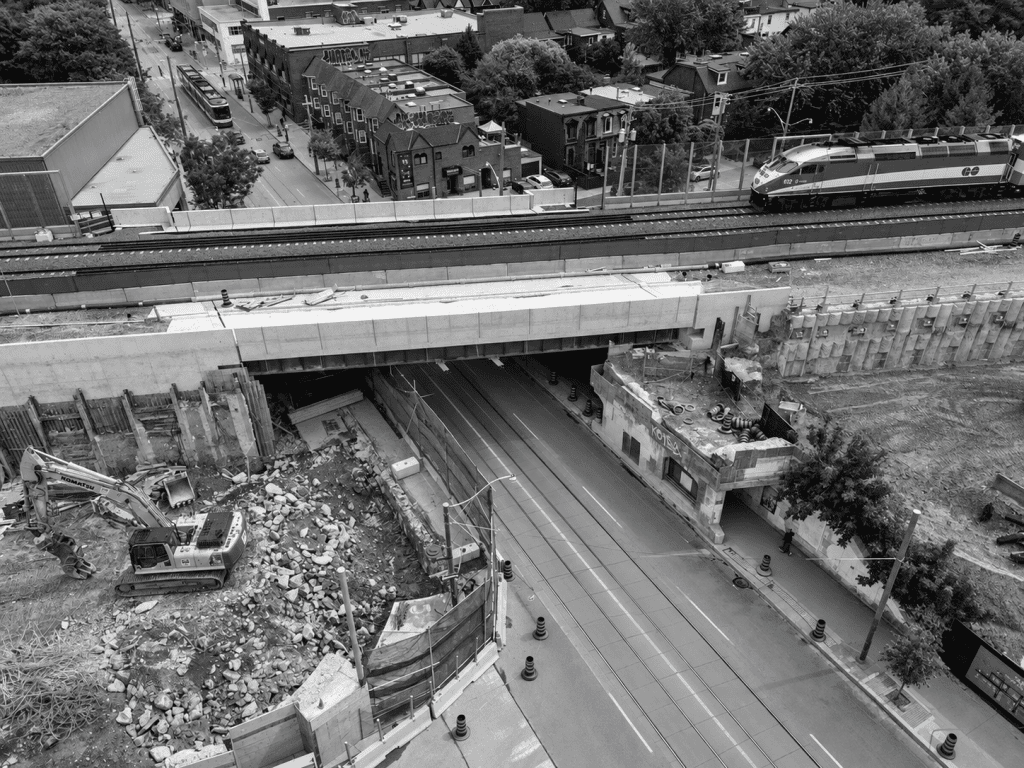
If you’ve spent any time along Queen Street East, Gerrard or Pape lately, you’ve seen the construction. Railway bridges are being rebuilt, roads are being narrowed, and familiar corners of our neighbourhoods are becoming construction sites.
But there’s a much bigger story unfolding.
Over the next decade, Riverdale, Riverside and Leslieville will become part of an entirely different transit network, with new connections to downtown, the waterfront and the rest of Toronto.
At the same time, the eastern waterfront is being transformed from former industrial lands into parks, residential communities and employment districts.
For those of us who live and work in the east end, it’s worth understanding exactly what’s coming.
1. The Ontario Line: Where Things Stand in 2026
The Ontario Line is a 15.6-kilometre subway connecting Exhibition Place to Don Mills Road and Eglinton Avenue East, with 15 stations along the route.
Unlike the existing subway network, which requires many east-end residents to travel north to Line 2 before heading downtown, the Ontario Line will provide a more direct connection across the city.
For our neighbourhoods, the most relevant stations include:
- Leslieville Station: At Queen Street East and the railway corridor, serving Leslieville and Riverside.
- Gerrard Station: Near Gerrard Street East and Carlaw Avenue, providing access to South Riverdale.
- Pape Station: Connecting the Ontario Line to the existing Line 2 subway.
- Cosburn Station: Bringing rapid transit to another section of Pape Avenue.
- East Harbour Station: Connecting the Ontario Line with GO Transit at a major new interchange.
These stations could fundamentally change how residents move around the city.
Metrolinx projects that approximately 9,500 people will live within walking distance of Leslieville Station, with approximately 4,000 passengers using the station during the busiest hour by 2041.
And construction is no longer preliminary.
By fall 2026, crews are working on piling, structural supports, railway corridor infrastructure and station construction. Work is also progressing on the underground section beneath Pape Avenue.
The foundations of this new transit network are quite literally being built around us.
2. What’s Happening Along Queen, Gerrard and Pape?
The construction is taking place in stages, and each neighbourhood is experiencing it differently.
Leslieville and Queen Street East
The railway corridor near Queen and De Grassi is undergoing substantial work to accommodate the new station and Ontario Line infrastructure.
Station foundation work and support columns are progressing, while pedestrian and traffic changes are expected to remain part of daily life for several years.
Some approved lane and sidewalk restrictions extend into 2028, with additional temporary work planned for 2029.
Gerrard and Carlaw
At Gerrard, crews are preparing the transition between the above-ground railway alignment and the underground tunnel beneath Pape Avenue.
This includes structural work, noise barriers and changes around the railway corridor.
Pape Avenue
The northern portion of the east-end project involves approximately three kilometres of twin tunnels, connecting the Gerrard portal with the Don Valley area.
The work includes two underground stations at Pape and Cosburn, as well as a new interchange with Line 2.
These are major engineering projects, not simply station renovations.
The short-term reality is construction noise, detours, reduced road capacity and inconvenience for residents and businesses.
The long-term objective is a much more connected east end.
3. East Harbour: The Project That Could Change Everything
While the Ontario Line is receiving much of the attention, East Harbour deserves just as much discussion.
Located south of Eastern Avenue near the Don River, the former industrial district is being planned as a major mixed-use employment and residential area.
At its centre will be the East Harbour Transit Hub.
The station will connect GO Transit services with the Ontario Line, creating a significant interchange outside Union Station.
For Leslieville and Riverdale residents, that means improved access to regional rail and destinations beyond the downtown core.
Construction is already advancing.
In 2026, crews have been building the main station structure, pouring concrete columns, installing platform canopies and preparing rail infrastructure.
The surrounding district is expected to evolve over many years, with future commercial, residential and public spaces.
What’s especially interesting is how this changes the geography of the east end.
For decades, the railway corridor and industrial lands around Eastern Avenue have created a physical separation between established residential streets and the waterfront.
East Harbour, together with new transit and planned street connections, could begin to change that relationship.
4. Waterfront Toronto: The Transformation Beyond the Subway
The Ontario Line is only one part of the story.
Waterfront Toronto has been working on an equally ambitious transformation of the Port Lands and the mouth of the Don River.
One of the most significant accomplishments has been the creation of a new naturalized river valley.
The $1.4-billion Port Lands Flood Protection project has reshaped the river’s outlet, created new public spaces and enabled future development on lands previously vulnerable to flooding.
In July 2026, another 10 acres of Biidaasige Park opened, bringing the total parkland opened in 2025 and 2026 to approximately 60 acres.
The park includes waterfront promenades, paddling opportunities, trails, public art and places to gather.
For east-end families, this is particularly exciting.
What was once largely inaccessible industrial waterfront is becoming a destination for walking, cycling and recreation.
And the transformation isn’t finished.
Ookwemin Minising, formerly known as Villiers Island, is envisioned as a new mixed-use community that could eventually accommodate approximately 21,000 residents over the next 25 years.
The area is being planned with housing, employment, parks and public infrastructure.
It’s a remarkable change to a part of Toronto that has historically been disconnected from the residential neighbourhoods immediately north of it.
5. The Missing Piece: Broadview and Eastern Flood Protection
One of the least discussed but most important projects is taking place near Broadview and Eastern Avenue.
Waterfront Toronto is constructing additional flood protection infrastructure to address remaining flood risks east of the Don River.
This work involves excavation, utility relocation, road changes and new protective landforms.
Why does it matter?
Because flood protection is essential to unlocking the future development of East Harbour and supporting other infrastructure improvements.
It also helps enable the proposed extension of Broadview Avenue southward.
This is a good example of how interconnected these projects really are.
The subway, new roads, flood protection and redevelopment plans cannot be considered independently.
One project often creates the conditions necessary for the next.
6. How Much Is All of This Costing?
The numbers are substantial, and they’ve changed considerably since the Ontario Line was first announced.
In 2019, the subway was initially presented with an estimated cost of approximately $10.9 billion.
By 2022, estimates had increased to nearly $20 billion.
In August 2026, CityNews reported that the latest projected cost had reached approximately $34 billion, although Metrolinx had not finalized all contract pricing.
One of the latest contracts, awarded in August, was a $4.32-billion agreement for the Pape tunnel and underground stations.
It’s important to understand that publicly reported project totals can include different combinations of construction, financing, property acquisition, operations and maintenance.
Separately, the Port Lands Flood Protection project represents a $1.4-billion investment by the three levels of government.
Waterfront Toronto’s 2026–27 business plan also outlines approximately $284.8 million in planned capital investment across projects including Quayside, flood protection, parks and waterfront infrastructure.
These are enormous public investments, with long-term consequences for how Toronto grows.
7. When Will Construction Actually Finish?
This is probably the question I hear most often.
The Ontario Line was originally expected to open in 2027. That timeline has changed.
As of 2026, Metrolinx is targeting the early 2030s, but has not committed to a firm opening date.
While 2031 has frequently been referenced, it’s important not to treat that year as guaranteed.
Major civil construction must be completed before systems installation, testing, safety certification and passenger service can begin.
For residents living close to the construction corridor, disruptions will vary by location and stage of work.
The waterfront transformation is on an entirely different timeline.
Some parks are already open, while new neighbourhoods, roads and major developments will continue to take shape over the next decade and beyond.
In other words, there isn’t one finish line.
This is a series of connected projects that will gradually reshape the east end.
8. What Does This Mean for Riverdale and Leslieville Real Estate?
As a Realtor who works extensively in the east end, I’m particularly interested in how these projects could change the way buyers evaluate our neighbourhoods.
Riverdale and Leslieville have always offered something that’s difficult to replicate: established residential streets, mature trees, independent businesses, neighbourhood parks and a strong sense of community.
What they haven’t always offered is direct rapid-transit access to every part of the city.
The Ontario Line changes that equation.
Homes within walking distance of the new stations could become more appealing to buyers who prioritize transit connectivity.
East Harbour could also introduce new employment opportunities nearby, while the waterfront transformation will provide additional recreational amenities.
But I wouldn’t assume every property will benefit equally.
Homes immediately adjacent to elevated tracks, stations or major construction corridors may face different considerations around noise, privacy and traffic.
New housing supply could also change the competitive landscape for existing properties.
The long-term effects on property values will depend on the individual location, housing type, market conditions and how successfully these projects are delivered.
What seems clear is that buyers will eventually be evaluating the east end against a very different transportation and amenity map.
9. The Next Chapter for Toronto’s East End
It’s easy to become frustrated by construction when you’re navigating another road closure or listening to another morning of drilling.
And those frustrations are legitimate, particularly for residents and independent businesses dealing with years of disruption.
But it’s also worth looking beyond the construction fencing.
We’re watching a new subway take shape, a major regional transit hub emerge, a river return to a more natural course, and former industrial lands become public parks and future communities.
The neighbourhoods themselves will continue to evolve.
My hope is that we can accommodate this growth while preserving the qualities that make Riverdale and Leslieville so special in the first place.
The tree-lined streets, independent businesses, beautiful older homes and genuine neighbourhood character are not things we should take for granted.
The next decade will be an important one for Toronto’s east end.
And I’ll be following the changes closely.
Danielle in the City
Local perspective on Toronto real estate, neighbourhoods and the places we call home.